Drydocking Services in Greece
Miss a drydocking interval in Greece or anywhere else and the consequences are immediate: class suspension, insurance voidance, and a vessel that cannot trade until the survey is completed. Classification societies allow no flexibility on this. + That is precisely why IGMAR Shipyards operates as a highly specialized entity. We combine 50 years of inherited maritime expertise with the agility of a modern, dedicated repair division to guarantee absolute compliance and precision.
What Drydocking Involves
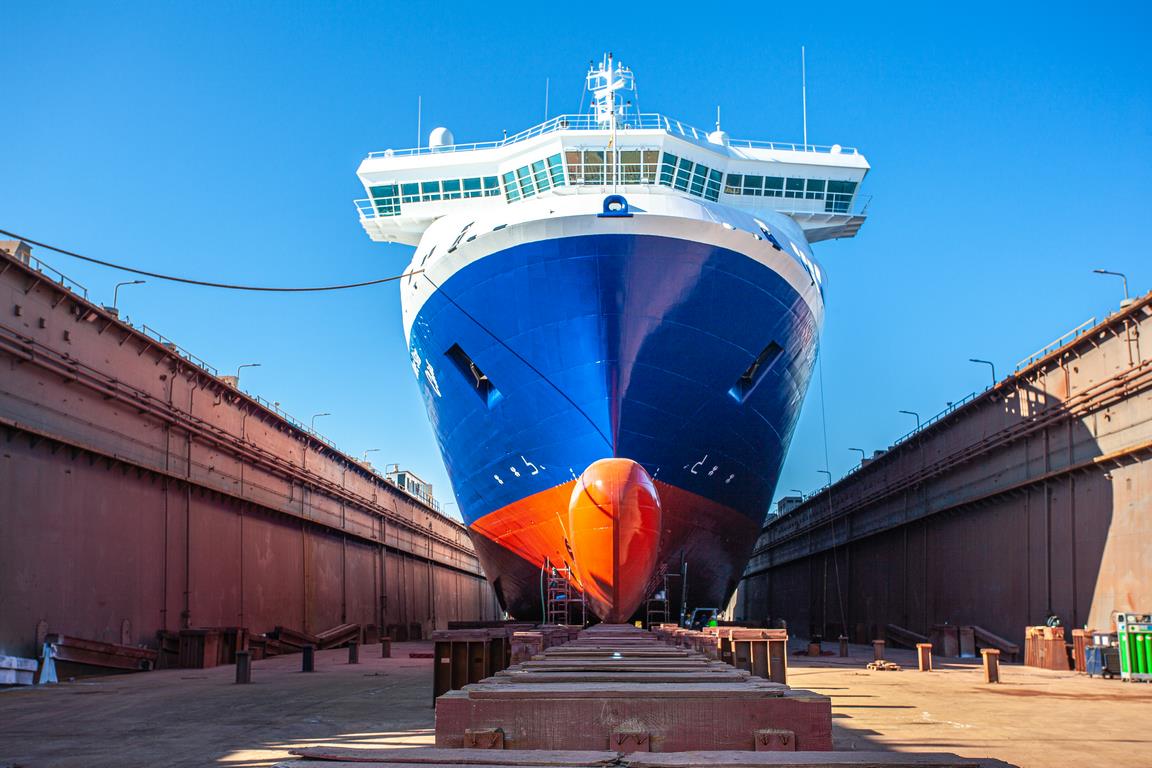
Dry-docking brings the vessel out of the water to allow inspection and maintenance of the underwater hull, propulsion system, and components that cannot be accessed afloat. The core elements of a standard dry-docking include:
Underwater hull cleaning: removal of marine growth, biofouling, and old coatings using hydro-blasting or grit blasting
Hull inspection: thickness gauging using ultrasonic measurement, visual assessment of steel condition, and documentation of any wastage or defects
Antifouling application: primer coats and antifouling paint applied to the cleaned hull according to the paint system specification
Propeller and shaft work: inspection, polishing, and where required, repair or replacement of propeller blades, shaft seals, and stern tube bearings
Anode replacement: sacrificial zinc or aluminium anodes replaced to maintain cathodic protection
Sea chest inspection and maintenance: cleaning, inspection, and repair of sea chest gratings and valves
Class survey completion: all mandatory inspections completed in the presence of the classification society surveyor
Additional work is routinely identified once the hull is accessible. Steel renewal, valve repairs, and mechanical overhaul are common additions that cannot be fully scoped until the vessel is out of the water.
Classification Intervals and Survey Requirements
Classification societies including Lloyd's Register, Bureau Veritas, DNV, and the American Bureau of Shipping impose specific intervals on dry-docking inspections. The standard requirement is a bottom survey every two and a half years, with a full special survey every five years. Special surveys are more comprehensive, covering internal tank inspections, machinery surveys, and structural assessments in addition to the hull work.
Failure to meet the required interval results in class suspension, which immediately voids the vessel's insurance cover and renders it ineligible for commercial operation.
IGMAR Shipyards Drydocking Infrastructure
IGMAR Shipyards operates dry-docking facilities at the Salamina yard, positioned within the Piraeus repair cluster with direct access from the main shipping lanes of the Aegean and Eastern Mediterranean. For fleet managers, this translates to zero route deviation and zero wasted transit days.
Infrastructure includes:
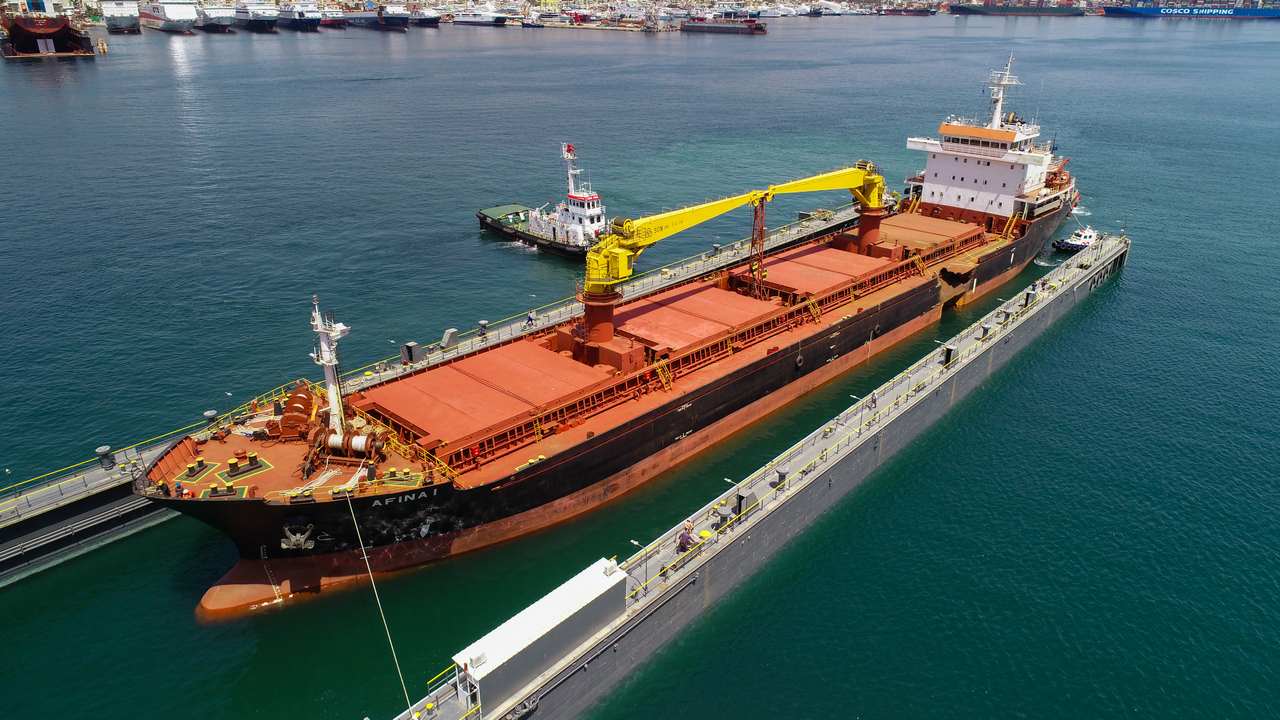
5,000-tonne floating dock, 100m in length and 28.6m beam
820-tonne Mobile Boat Hauler for vessels up to 80m in length
300-tonne Mobile Boat Trolley for internal yard transfers
Kamag Technology boat trailers for vessels up to 100m and 2,500 tonnes
Capacity for more than 30 vessels hauled ashore simultaneously
High-power water jetting equipment rated between 400 and 3,000 bar covers hull cleaning and surface preparation. Sand blasting and aqua blasting are available depending on coating system requirements.
In-House Technical Support
Dry-docking requires more than lifting infrastructure. IGMAR Shipyards maintains an in-house technical department staffed by naval architects, mechanical engineers, electrical engineers, and a safety chemist. This team oversees the repair specification, supervises all work, coordinates directly with the class surveyor, and provides the documentation required for insurance, flag state, and certification purposes.
Planning Your Dry-Docking
Effective planning begins three to six months before the class-required date. The key steps are:
Confirm the class due date and survey scope with the classification society
Compile the preliminary repair list from superintendents' inspection reports and known defects
Contact the yard to confirm availability and discuss facility fit for vessel dimensions
Agree the work specification and schedule including expected duration and critical path items
Coordinate arrival with the pilot station and port authority
Owners and technical managers who plan early control the schedule, manage the scope of additional work found during docking, and return the vessel to service without unplanned delays.
Frequently Asked Questions
How often must a commercial vessel be dry-docked?
Most commercial vessels in class require a bottom survey every two and a half years. A full special survey is required every five years and includes dry-docking plus internal tank inspections and machinery surveys. Non-compliance results in class suspension.
What is the maximum vessel size IGMAR Shipyards can handle in Salamina?
The Salamina yard's floating dock is 100m in length and accepts vessels up to 5,000 tonnes displacement. The 820-tonne Mobile Boat Hauler handles vessels up to 80m. Contact the shipyard team to confirm capacity for a specific vessel.
What surface preparation methods are available?
IGMAR Shipyards offers ultra-high-pressure water jetting at up to 3,000 bar, standard hydro-blasting, sand blasting, and aqua blasting. The method selected depends on the coating system specification and the condition of existing coatings.
Does IGMAR Shipyards coordinate directly with classification societies?
Yes. The in-house technical team works directly with surveyors from all major classification societies during dry-docking inspections, thickness gauging, and survey completion. The yard provides the full documentation package required for class certificate renewal.
Can additional repair work be added once the vessel is in dry-dock?
Yes, and this is standard practice. Underwater inspections and thickness gauging frequently reveal additional steel work, valve repairs, or coating deficiencies not visible afloat. IGMAR Shipyards prices additional work transparently against the agreed rate schedule.
As the modern evolution of a 50-year maritime legacy, IGMAR Shipyards provides complete drydocking services at the Salamina facility with infrastructure for commercial vessels up to 100m and a fully qualified in-house technical team. Contact the yard to confirm availability and begin planning your next dry-docking.