
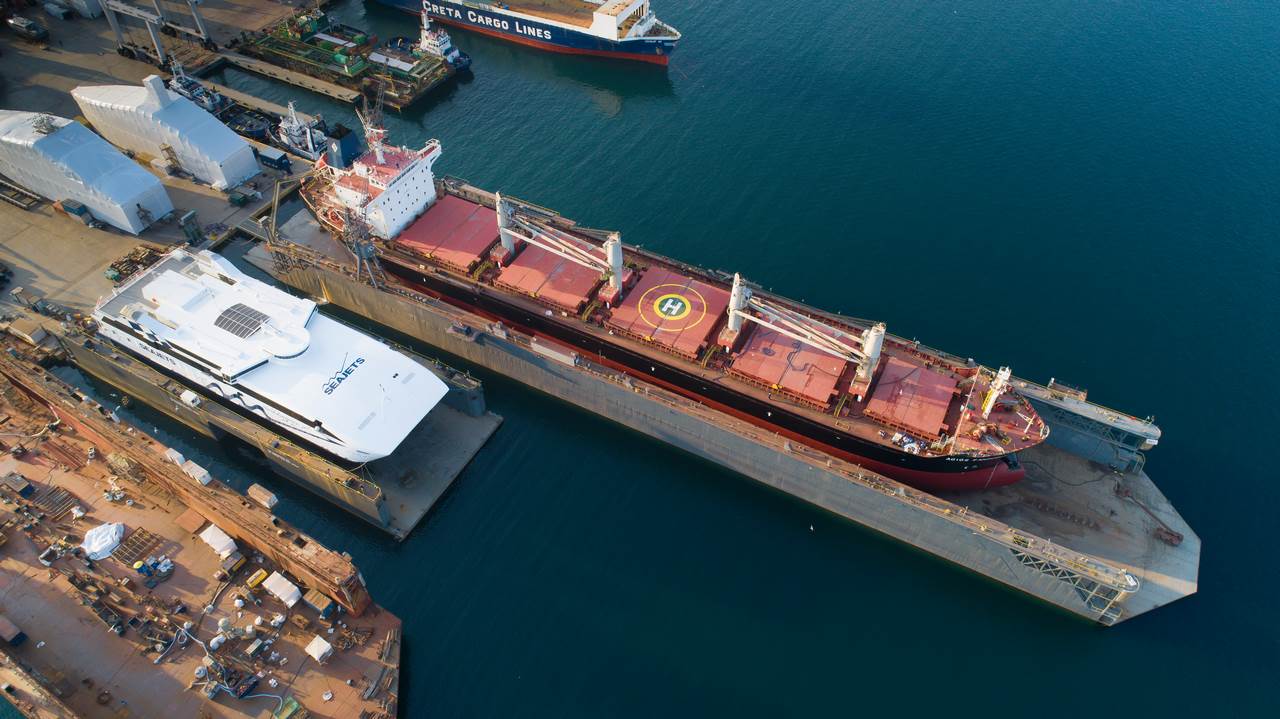
Vessel Conversion Refit Greece
Vessel conversion and refit in Greece has become a more commercially attractive option as newbuild costs rise, delivery slots lengthen, and operators look to extend asset lifespans rather than commit to new tonnage. The Eastern Mediterranean is the right geography for this work: yards in the Piraeus cluster sit within the main shipping corridor, accessible from the Aegean, the Suez Canal route, and the Black Sea without route deviation. IGMAR Shipyards in Salamina provides the full technical and infrastructure scope for commercial vessel conversion and refit, from structural modifications and machinery overhaul to class approval coordination and complete interior redesign.
What Vessel Conversion Involves
Conversion is a broader category than most operators initially assume. The defining characteristic is that the vessel's configuration, capability, or class notation changes as a result of the work.
Common conversion categories include:
Trade conversion: adapting a vessel from one commercial function to another, for example converting a cargo vessel to a bunkering barge or a harbour tug to an anchor handler
Regulatory conversion: modifying systems or structure to meet revised class rules, flag state requirements, or environmental standards such as ballast water treatment installation
Life extension: comprehensive structural assessment, steel renewal, and machinery overhaul to extend the vessel's class certificate and commercial operational life
Accommodation refit: redesigning crew quarters, passenger areas, or working spaces to meet current standards or operator preferences
Capacity modification: altering cargo hold dimensions, tank configurations, or deck layouts to improve operational efficiency in a new trade
What a Refit Involves
A refit returns the vessel to optimal operational condition without necessarily changing its classification or commercial function. It addresses deferred maintenance, completes scheduled class work, and upgrades systems that have reached the end of their service life.
A standard refit scope at IGMAR Shipyards covers:
Hauling, drydocking, hull inspection, and class survey
Steel plate renewals and structural repairs
Hydro-blasting and surface preparation at up to 3,000 bar
Painting, antifouling, and surface treatment
Mechanical, piping, and engine room works
Shafting and propeller inspection and repair
Electrical system diagnostics and overhaul
Accommodation and interior works
Scaffolding and shrink wrap for weather protection during extended stays
IGMAR Shipyards Facility
IGMAR Shipyards at Salamina operates on more than 62,000 square metres with dedicated zones for hauling, docking, repair, conversion, and extended stays. The yard handles commercial vessels, workboats, and support craft up to 100m in length. Infrastructure includes a fully equipped machine shop with CNC cutting machines, a plate shop and pipe shop for fabrication work, an electrical workshop, carpentry, and welding across all standard methods.
The in-house technical department, staffed by naval architects, mechanical and electrical engineers, and a safety chemist, manages the conversion design, classification society coordination, and full project supervision from specification to delivery.
Classification Society Coordination
Every conversion that changes a vessel's class notation, trading area, or structural configuration requires classification society approval. The process typically involves:
Submission of conversion design drawings to the class surveyor for plan approval
Survey attendance at defined stages of structural and mechanical work
Completion of all required tests and trials before the amended class certificate is issued
Flag state notification where the conversion affects the vessel's statutory certificates
IGMAR Shipyards coordinates directly with surveyors from all major classification societies. The in-house technical team prepares and submits documentation, manages the survey schedule, and ensures that work sequencing aligns with the class approval process. Delays in class coordination are where conversion projects lose time and budget.
Why Greece for Conversion and Refit
Vessels active in the Eastern Mediterranean, the Aegean, or the Suez Canal corridor can call at Salamina without a route deviation that costs off-hire days. Greece also offers a concentration of specialist maritime subcontractors, equipment suppliers, and marine surveyors in the Piraeus area. The Perama area surrounding the Salamina yard is one of the most concentrated ship repair and supply clusters in the Mediterranean. By executing these complex projects within this concentrated hub, IGMAR Shipyards leverages its extensive network and deep-rooted expertise to deliver conversions on time, on budget, and without compromise.
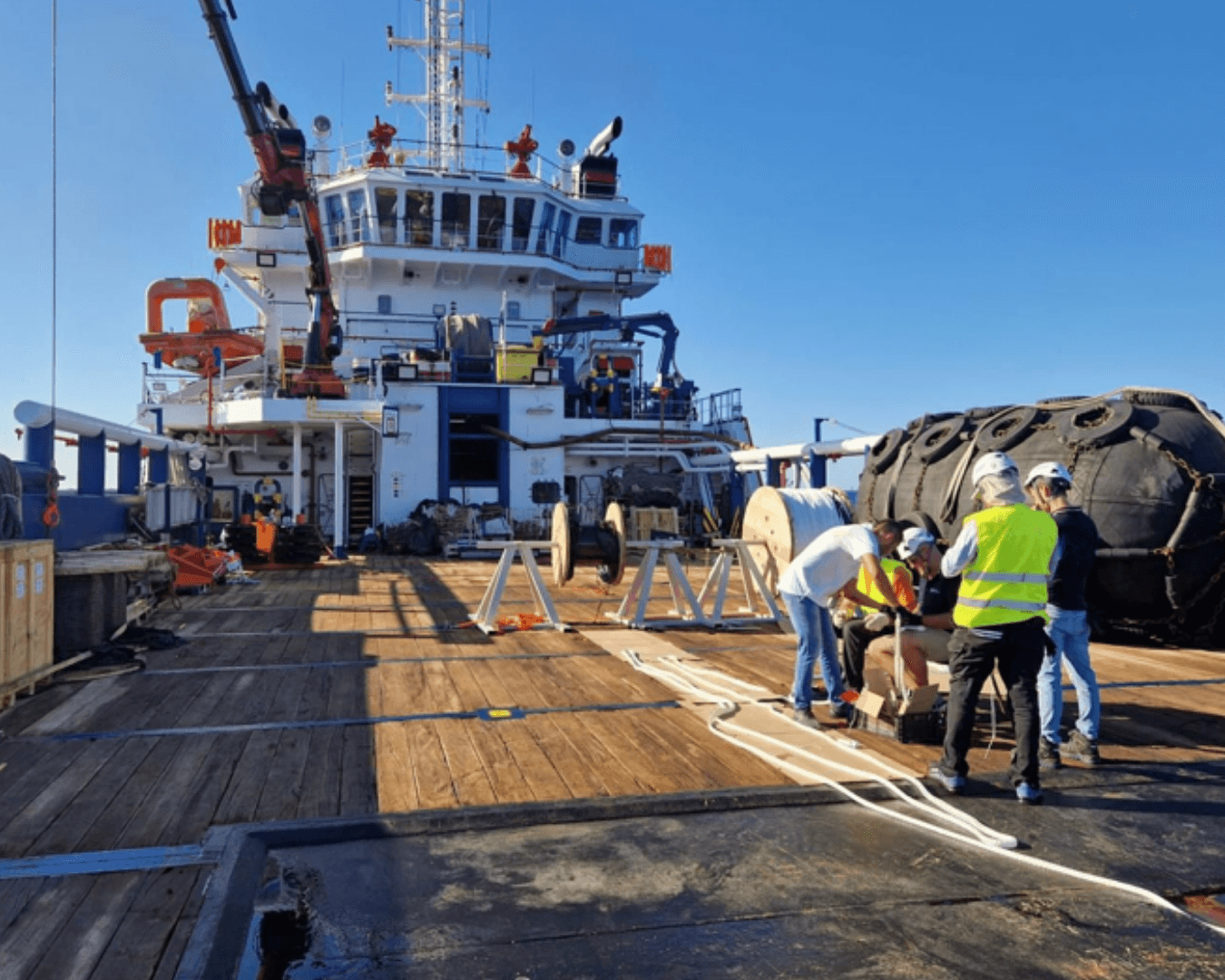
Frequently Asked Questions
What is the difference between a refit and a conversion?
A refit returns the vessel to optimal condition without changing its class notation or commercial function. A conversion modifies the vessel's structure, systems, or configuration in a way that changes its class notation, trade capability, or regulatory status. A conversion requires classification society plan approval and a more extensive design and documentation process.
How long does a vessel conversion project take at IGMAR Shipyards?
Duration depends on scope. A straightforward trade conversion with system modifications and minor structural work may take four to eight weeks. A comprehensive life extension with significant steel renewal, machinery overhaul, and class survey completion can take three to six months. IGMAR Shipyards provides a project programme with a critical path at the planning stage.
Can IGMAR Shipyards manage the full conversion including classification approval?
Yes. The in-house technical department manages the full conversion process including drawing preparation, class submission, survey scheduling, and documentation completion. For owners who prefer to retain their own project manager or class consultant, the yard's team works in coordination.
What structural modifications can IGMAR Shipyards carry out?
The yard executes steel plate renewals, frame repairs, bulkhead modifications, deck alterations, and superstructure changes. Certified topside and underwater welding is available. NDT including ultrasonic thickness measurement is carried out by qualified personnel to classification society standards.
Are there on-site facilities for crews during a long project?
IGMAR Shipyards at Salamina includes conference rooms, office facilities, and on-site support infrastructure. For extended stays, the yard coordinates accommodation arrangements. The Perama and Piraeus area offers a range of hotel and serviced accommodation within practical distance of the yard.
IGMAR Shipyards at Salamina offers full vessel conversion and refit capability with an in-house technical department, classification society coordination, and facility capacity for commercial vessels up to 100m. Contact the shipyard team to discuss project scope, schedule, and technical requirements.